

Forest Bathing
Forest Bathing in Autumn: A Seasonal Guide to Mindful Woodland Walks
October 04, 2026
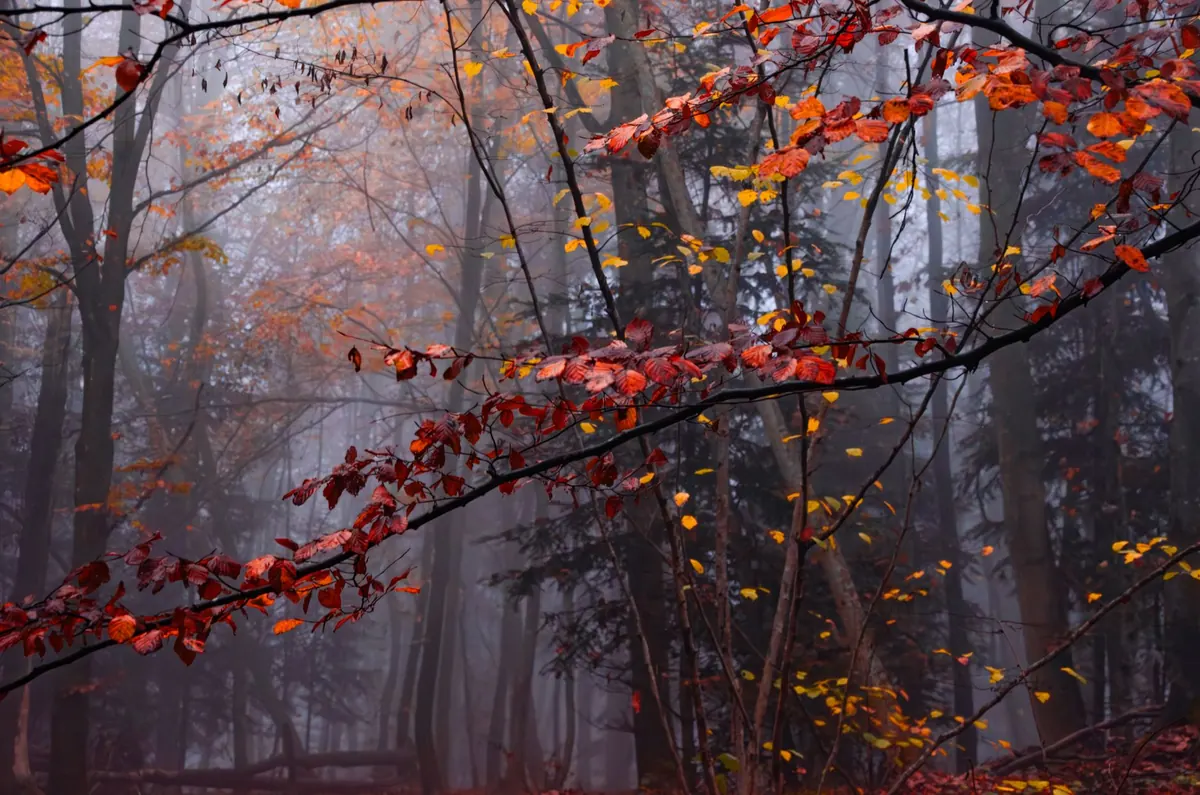
Autumn changes a wood faster than any other season. One week the beech is green, the next it is copper at the edges, and there is a smell off the leaf litter that June cannot match. The canopy opens, the light drops lower, and for a few weeks the whole place seems to be quietly dismantling itself before winter. That shift is why autumn suits forest bathing so well. Nothing needs engineering. You walk slower than usual and let your senses do the work.
What autumn does to your senses
Shinrin-yoku — forest bathing — is not a hike with a theme. It is a deliberate slowing down, usually over a short distance, to take in a wood through smell, sound, touch and sight. Autumn hands you most of that for free.
Damp air carries scent further, so leaf mould, wet bark and fungi register where in summer they would not. With fewer leaves on the trees, sound travels differently: an October wood is louder in some ways, full of rattles, drips and the lift of a breeze through bare branches. And because the crowds have thinned, you can stand still on a path for ten minutes without anyone stepping round you.
Before you set out
Autumn walking is easy to underestimate. Mornings start cold, afternoons close in early, and wet leaves on roots or boardwalk can be genuinely slippery. A little preparation makes a slow walk far more likely to actually happen.
- Dress for standing still, not striding. A wool or fleece mid-layer, a waterproof shell and a hat make a twenty-minute sit possible. Thin gloves are worth the fuss.
- Wear boots with grip. Wet leaves and roots are slicker than they look, particularly on slopes and timber boardwalks.
- Take something to sit on. A folded sit mat, a square of foam or even a thick carrier bag keeps you off cold, damp ground.
- Carry a flask. Warm tea at the end of a slow walk is a good way to finish.
- Time it well. The first hour after sunrise and the last hour before dusk give the best light, but pack a small torch in case you stay out longer than planned.
- Check access first. Keep to public footpaths, permissive paths or land where you have a right of access, and read any notices — some estates limit access during autumn deer management.
Tell someone your route and rough return time; phone signal is patchy in many woods. If a health condition is affected by cold or exertion, speak to a doctor or qualified health professional before long, slow walks in low temperatures.
Autumn sensory prompts
Use one of these per walk rather than all of them. The point is attention, not a checklist.
- Find the smell of the ground. After rain, crouch down and breathe in the leaf litter. It is earthy, slightly sharp, the smell of leaves breaking down.
- Listen for the tick of falling leaves. Beech and sycamore make a light tap as they land on dry litter. Stand still long enough and you will hear one.
- Count the colours in one tree. Not just "orange" — lemon, brass, ginger, rust, and whatever green survives near the trunk.
- Touch three kinds of bark. Birch is cool and papery, oak deep and rough, beech smooth and often grey-green with algae.
- Watch for movement. Jays shifting acorns, squirrels burying nuts, redwings and fieldfares arriving for the winter.
- Study a single fallen leaf. Hold it up to the light and trace the veins, the dry brown edge, the shape that marks out the species.
- Notice the layers of sound. Start with what is closest, then what is further off, then whatever sits underneath both.
- Feel the temperature change. Walk from a sunlit clearing into a shaded ride and note the drop on your face and hands.
Colour-watching: one tree, ten minutes
Leaves are a good anchor because they change while you watch. Choose a tree near the start of a familiar path and give it five minutes at the beginning of the walk and five at the end.
Stand still and let your eyes soften rather than fixing on a single leaf. Squinting helps; it flattens the detail and lets the colour come forward. Name three shades out loud, or write them in a notebook — "lime, straw, conker" is plenty. Try not to photograph everything. Two or three photographs, chosen slowly, will teach you more than fifty taken at walking pace, because a camera rarely catches the way low sun comes through a thinning canopy.
Come back to the same tree
Return every week or fortnight and watch the change move from the outside of the crown inwards. Weather decides the pace. Wind and heavy rain strip trees quickly, frost pushes colour down, and a still, misty morning holds it longest. The change only runs one way, which is part of the interest.
Grounding on cold, damp ground
Grounding in autumn is mostly about staying warm enough to stay still. You do not need bare feet in October.
Stand with your feet hip-width apart and your weight even. Feel the heel, the ball, the toes, the crunch of leaf litter under the sole. Take three slow breaths, letting each exhale run longer than the inhale. That is the whole exercise.
Then find a sit spot: fifteen to twenty minutes on a mat or a dry log, phone in your pocket. Pick somewhere with something to look at — the edge of a clearing, a stream, a fallen trunk. If the cold tells you to move after ten minutes, move. That is normal, not failure.
If you want contact with a tree, rest a palm flat against the trunk for a minute or two and notice the temperature and texture. Birch will feel colder than oak on the same afternoon.
How to walk at half speed
The hardest part of forest bathing is the pace. Take the time you would normally allow for a route and double it. For the first ten minutes, walk at half your usual speed, then stop every five minutes for sixty seconds without taking out your phone.
If counting suits you better, use paces between stops: a hundred to begin with, then fifty. Walking with someone else, agree to spend the first ten minutes in silence. It usually feels awkward for about three minutes and then stops feeling awkward at all.
Making it an autumn habit
Pick one wood, one day a week, and give it forty-five to sixty minutes. Ten minutes on a lunch break counts as well. Keep a notebook and write three lines afterwards: what you heard, what you saw, what you noticed. Nothing more is needed.
Rain is not a reason to cancel. Waterproofs, a hood, and the sound of rain on leaves is one of the better autumn experiences available. Finish with tea from the flask, sitting somewhere out of the wind. There is no perfect walk to aim for — only a slower one, repeated often enough that the noticing becomes the point.
Photo: Adrian Limani / Pexels
Related posts
More stories you’ll love reading