




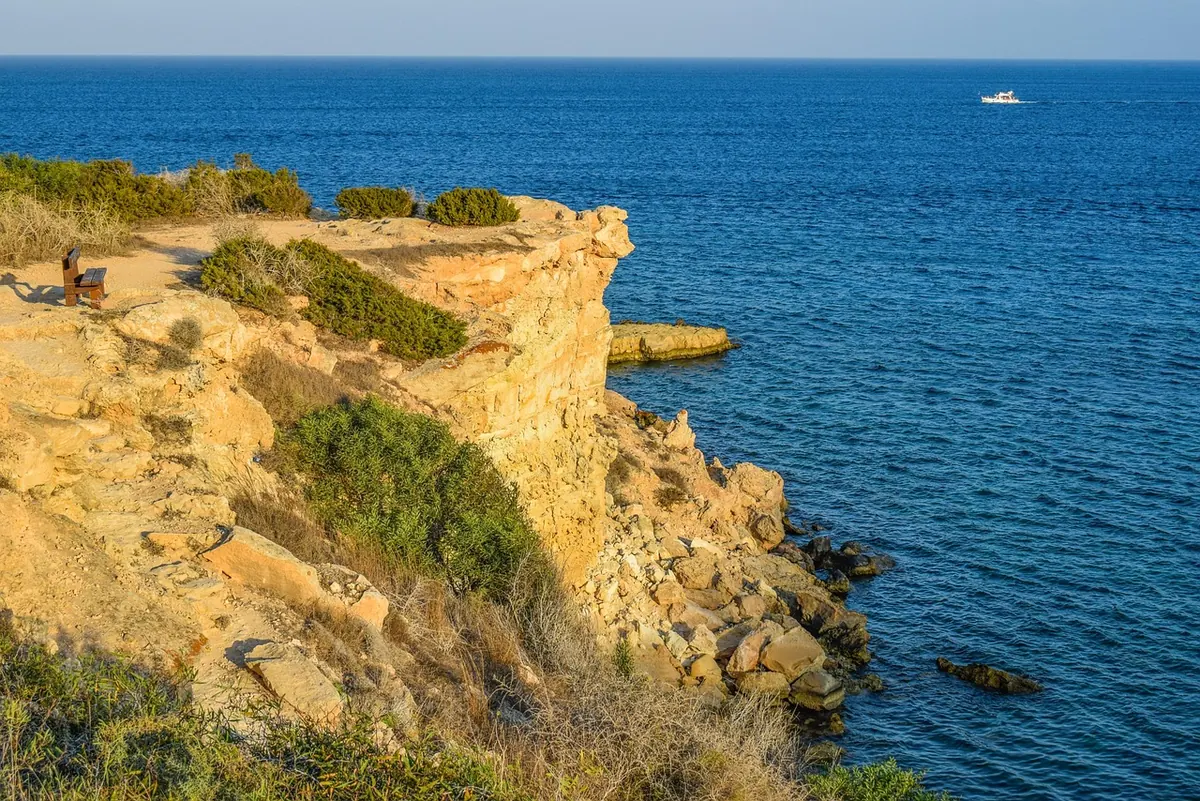
Twenty miles apart, two paths can give you two utterly different days out. A coastal route hands you sea air, cliff steps and a horizon that keeps shifting; a moorland route takes you inland into empty country where the view is grass, gritstone and sky for hours at a time. Both are worth booking annual leave for. The question is which one suits your legs, your kit and your mood on the day you set off.
Terrain: what your legs will actually feel
Coastal paths in the UK rarely stay flat for long. Even the gentler stretches of the South West Coast Path or the Pembrokeshire Coast Path drop into a cove and climb straight back out, often on steps cut into the cliff. Individual climbs of 60 to 120 metres look modest on paper, but they arrive in waves. A twelve-mile coastal day can rack up more ascent than a walk to a summit inland, and it does so in short, punchy bursts that never quite let your calves settle.
Underfoot, the coast is a mix: packed earth, stone pitching, wet rock near the tide line, sand at the bottom of a descent into a bay. After rain, those stone steps and sloping rock slabs turn genuinely slippery.
Moorland works on a different rhythm. Gradients are longer and steadier, spread across miles rather than metres, over peat, heather, tussock grass and gritstone. What slows you down is rarely the climbing. It's the surface: boggy patches that swallow a boot, heather hiding ankle-turning rocks, and the extra concentration needed once the trodden line fades.
Navigation and how lost you could get
On the coast, the sea is your handrail. Even in mist you usually know which way is landward. On open moorland there is no such help. A cloud base at 500 metres turns a familiar plateau into a grey room with no walls, and the path you were following simply stops. That is not a reason to avoid the moors, but it is a reason to carry a paper map and compass and to know how to walk on a bearing before you go.
Views, weather and exposure
The coast gives you drama on a short loop: headlands stacking up behind one another, light changing over the water, seabirds moving below you. It also gives you wind. Cliff-top walking is exposed in a way inland routes are not, and a breezy forecast in town can mean a proper buffeting on the headland. There is little shade on a coastal path, and sun reflecting off the water burns more people than they expect.
Moorland views are slower and wider. Big skies, distant ridges, a silence that surprises first-timers. Cloud can arrive quickly and visibility can drop inside twenty minutes, and it is consistently cooler and windier up there than in the valley you parked in. On still, humid evenings in late spring and summer, midges can make a rest stop miserable.
Kit: what actually changes between the two
Most of your pack stays the same — waterproof jacket and trousers, a spare warm layer, food, water, a head torch in winter, a basic first aid kit. What differs is the detail.
- Footwear. Coastal routes reward a grippy sole and decent ankle support for wet rock and steep steps. Moorland asks for waterproof boots and, in wet months, gaiters.
- Trekking poles. Genuinely useful on coastal steps, and on the moors for balance across tussocks and small stream crossings.
- Navigation. A map and compass are worth carrying on the coast. On moorland they are essential kit, with a phone app as backup rather than your only plan.
- Midges. From late spring to late summer, a head net and repellent earn their place in a moorland pack.
- Sun and wind. Both routes are more exposed than a woodland walk. Sun cream, a hat and lip salve cover the coast; a windproof layer covers the moor.
- Dog kit. Lead, water bowl and a towel. Expect livestock and ground-nesting birds on both, so read local signs and follow them.
Wildlife: what you might see
Coastal cliffs are crowded in spring and early summer. Guillemots, razorbills, kittiwakes and fulmars pack onto ledges, choughs wheel over headlands in Cornwall and Wales, and peregrines hunt along the ridges. Look down from a safe distance for seals hauled out on rocks, and scan calm water from a headland for porpoises and dolphins. Oystercatchers and curlews work the estuaries below.
Moorland wildlife is quieter and more spread out: curlew, lapwing, golden plover and dunlin nesting on open ground, red grouse and skylark, merlin and ring ouzel in the rougher patches. Adders bask on warm mornings. Mountain hares turn white in winter in the Scottish Highlands and stand out against bare ground.
The practical point for both is the same. Between roughly March and July, ground-nesting birds are at their most vulnerable, and disturbance can cause a nest to fail. Keep to paths where you are asked to, give wildlife room, and put dogs on a lead around livestock and during nesting season.
Which one suits you?
Choose the coast if…
You like regular rewards, want the option to cut the day short at a village or bus stop, and don't mind climbing. Coastal routes suit walkers who prefer short, sharp efforts to long steady grinds, and they work well for a first big day out because settlements, cafés and transport links tend to be closer together.
Choose the moor if…
You want space, silence and a long horizon, and you are comfortable navigating. Moorland days suit walkers who like a steady pace, don't need a view around every corner, and are happy to be several miles from the nearest road. They ask more of your planning and less of your step count.
Planning the day
Whichever you pick, a few habits make the difference.
- Check the forecast the night before and again in the morning, including wind speed and visibility.
- Note tide times if your route crosses a beach, and check whether any section is cut off at high water.
- Carry a paper map even if you use an app. Signal is patchy on coasts and moors alike.
- Tell someone your route and expected finish time, and agree what happens if you are late.
- Plan an escape route. Coastal paths often have a lane or bus stop halfway; moorland routes rarely do.
- Start earlier than feels necessary, especially from October to March when daylight is short.
- Turn back if the weather changes. The hill and the cliff will still be there next month.
If you have a heart condition, joint trouble or a long-standing injury, it is worth a word with your GP before committing to a full day with significant ascent. That conversation is quicker than a rescue callout.
Finally, decide what you actually want from the day. A coastal walk gives you movement, noise and constant interest. A moorland walk gives you stillness and a real sense of distance. Neither is the better day out. The best one is the one you have planned properly and can enjoy from the first step back to the car park.
Related posts
More stories you’ll love reading